Process
Gravity die casting process parameters: temperatures, feeding and coatings
How aluminium gravity die casting works, the pouring and die temperatures, ingate velocity, feeding and coating practice, quality controls and the defects to watch for.
How gravity die casting works
Molten aluminium is poured under gravity into a preheated, coated steel or cast iron die. In tilt pouring, the die and pouring cup rotate together so metal flows in smoothly along the die wall instead of falling. Slow, calm filling and directional solidification toward feeders give dense, sound castings that respond well to heat treatment.
| Aspect | Gravity die casting | High pressure die casting |
|---|---|---|
| Filling | Gravity, about 0.5 m/s or less at the ingate | Injection, about 30 to 60 m/s at the gate |
| Wall thickness | About 3 to 15 mm | About 1.2 to 8 mm |
| Internal soundness | Very good; suits pressure tight and structural parts | Some entrapped gas; best for thin, complex parts |
| Heat treatment | Full T6 common (LM25, A356) | Usually as cast or T5 |
| Cores | Sand cores possible for internal passages | Steel cores only, no undercuts without slides |
| Tooling cost and volume | Lower tooling cost, low to medium volumes | Higher tooling cost, high volumes |
| Cycle time | Typically a few minutes | Typically under a minute |
Typical process parameters
| Parameter | Typical range | Why it matters |
|---|---|---|
| Pouring temperature, LM25 and A356 type alloys | About 700 to 740 °C | Hot enough to fill thin areas, cool enough to limit shrinkage and gas pick up |
| Pouring temperature, LM6 type alloys | About 680 to 720 °C | Eutectic alloys flow well at lower temperatures |
| Die working temperature | About 300 to 450 °C | Too cold causes misruns and cold laps; too hot slows the cycle and coarsens structure |
| Metal velocity at the ingate | About 0.5 m/s or less | Faster flow breaks the surface and folds oxide films into the casting |
| Tilt pour time | A few seconds to about 15 seconds, depending on size | Steady rotation keeps the metal front unbroken |
| Die coating on the cavity | Thin insulating layer, thicker in runners and feeders | Controls heat flow, keeps feeders liquid longer and helps release |
| Solidification time before opening | Set by the heaviest section, often one to several minutes | Opening early causes hot tears and distortion |
Feeding and directional solidification
Aluminium shrinks by several percent as it solidifies, so every thick section must be fed with liquid metal until it freezes. The rule is directional solidification: the casting freezes from its thinnest, furthest point back toward the feeder, which freezes last.
- Modulus: solidification time rises with the square of volume divided by cooling surface area (Chvorinov’s rule). A feeder needs a modulus about 1.2 times that of the section it feeds.
- Chills and cooling: local water or air cooling and thinner coating speed up sections that must freeze first.
- Insulating coatings and sleeves: keep feeders hot so they stay liquid longest.
- Gating: bottom or side filling with a filter in the runner keeps the flow calm and holds back oxides.
Dies, coatings and cores
- Dies: machined from hot work steel or cast iron, preheated before the first pour, and run at a stable temperature with cooling where needed.
- Coatings: refractory coatings are sprayed on the hot die and renewed on a set schedule; uneven or worn coating is a common cause of surface defects and inconsistent fill.
- Cores: metal cores for simple holes, sand cores for internal passages that cannot be pulled, such as pump volutes and water jackets.
- Venting: parting line vents and vent plugs let air and coating gases escape.
Quality controls that make it repeatable
| Control | Practice |
|---|---|
| Melt quality | Rotary degassing, density index check after treatment, grain refinement and strontium modification for LM25 and A356 |
| Temperatures | Pouring and die temperatures checked and recorded for each run |
| Coating | Coating type, thickness and renewal schedule fixed in the work instruction |
| Soundness | X ray on every new component development; pressure or leak testing where the part must seal |
| Heat treatment | T6 cycle recorded per load, with hardness checks |
| Dimensions | First article inspection on every new die; critical dimensions air gauged after machining |
Common gravity casting defects
| Defect | Likely cause | Remedy |
|---|---|---|
| Shrinkage porosity | Thick section not fed; feeder too small or freezes first | Larger or insulated feeder; chills; redesign section |
| Misrun or cold lap | Die or metal too cold; slow or interrupted pour | Raise die temperature; steady tilt; check coating |
| Oxide films | Turbulent pour; dross entering the die | Slower ingate velocity; filter; clean ladle and skimming |
| Gas porosity | Hydrogen in the melt; damp coating or cores | Degas and check density index; dry cores; bake coating |
| Hot tears | Restrained contraction; opening too late or too early | Add radii; adjust die opening time; balance cooling |
| Rough or patchy surface | Worn or uneven die coating | Renew coating on schedule; control spray thickness |
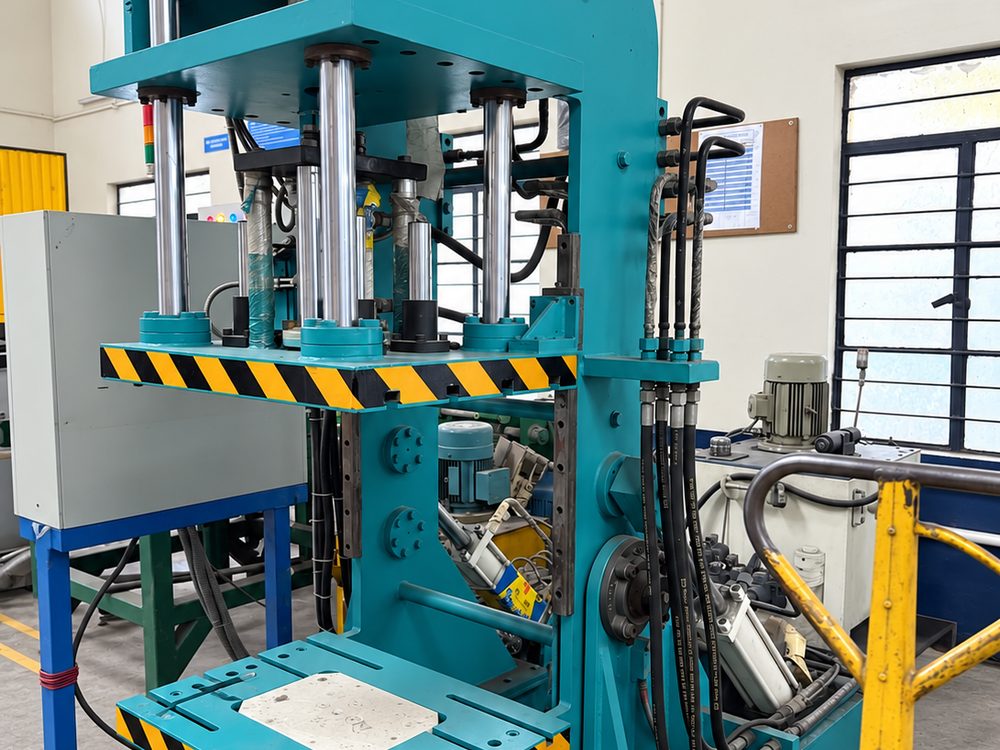
At Alcast, gravity castings run on tilting and horizontal machines in LM4, LM6, LM9, LM13 and LM25, from about 200 g to 25 kg, with dies up to 450 × 600 mm.
Values are typical published ranges for guidance. Every part is different: process windows are set and proven for each component through trials, and the governing standard and your drawing take precedence. Reviewed by the Alcast engineering team, November 2026.
Questions engineers ask
What pouring temperature is used for LM25 gravity die casting?
Typically about 700 to 740 °C, adjusted for section thickness and the length of the flow path.
What die temperature is used in gravity die casting?
Typically about 300 to 450 °C during production, with the die preheated before the first pour and coating renewed on a set schedule.
Why is tilt pouring better than static pouring?
Tilting lets metal run along the die wall instead of falling, which keeps the metal front unbroken and stops oxide films being folded into the casting.
When should I choose gravity die casting over HPDC?
For thicker sections, pressure tight or structural parts, parts that need full T6 heat treatment or sand cores, and low to medium volumes where lower tooling cost matters.