Case study · Series production
Matched left and right hand end caps, shipped by the pallet
Handed parts look almost identical. A mixed box stops a customer’s line. This is how we keep left and right hand end caps separated, counted and traceable from casting to dispatch.
- Industry
- Industrial products
- Part
- End caps, LH and RH
- Process
- Die casting, finishing, packing
- Shipped as
- Labelled pallets
The challenge
The customer buys end caps in matched pairs: one left hand and one right hand part for every assembly. The two parts are mirror images, so a single mixed carton or a short count on one hand can stop an assembly line and break the pairing for a whole shift.
How we control it
- Separated from the die onward. Left and right hand parts move through fettling, finishing and inspection in separate, identified lots.
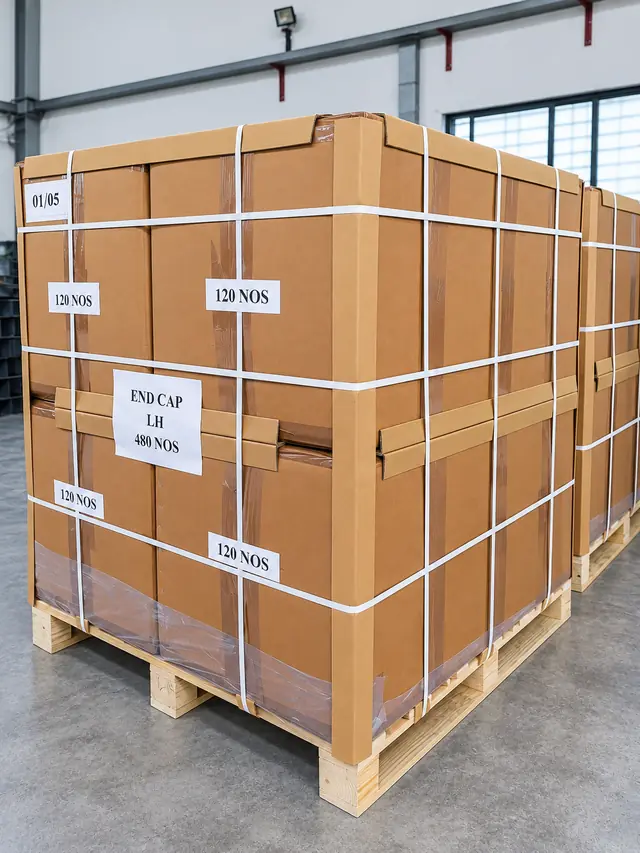
- Counted into standard cartons. Each carton holds a fixed count, and every carton face carries its quantity.
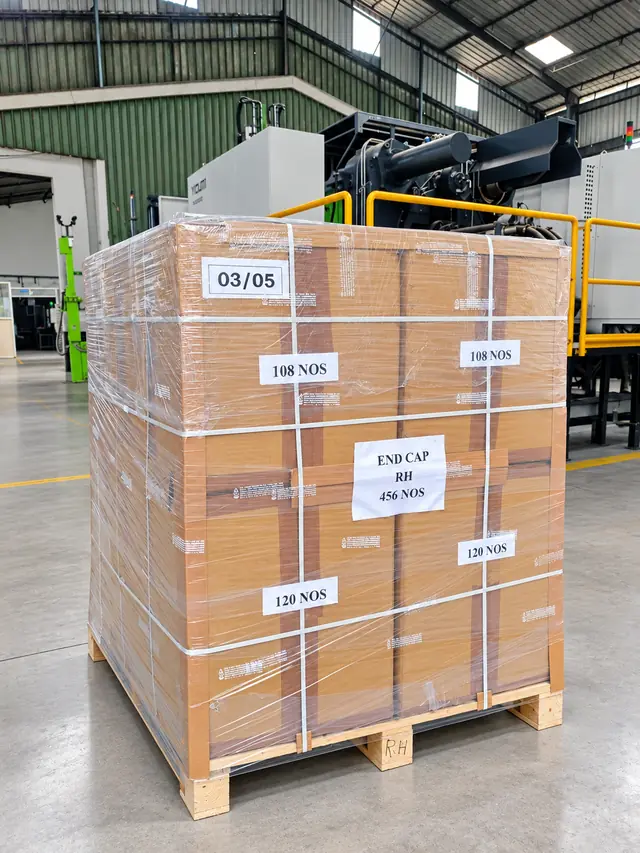
- Labelled by hand and total. Each pallet carries the part name, the hand and the total quantity, for example “END CAP RH, 456 NOS” and “END CAP LH, 480 NOS”.
- Numbered pallets. Pallets are numbered within each consignment, such as 01/05 or 03/05, so the receiving team can confirm a complete delivery at a glance.
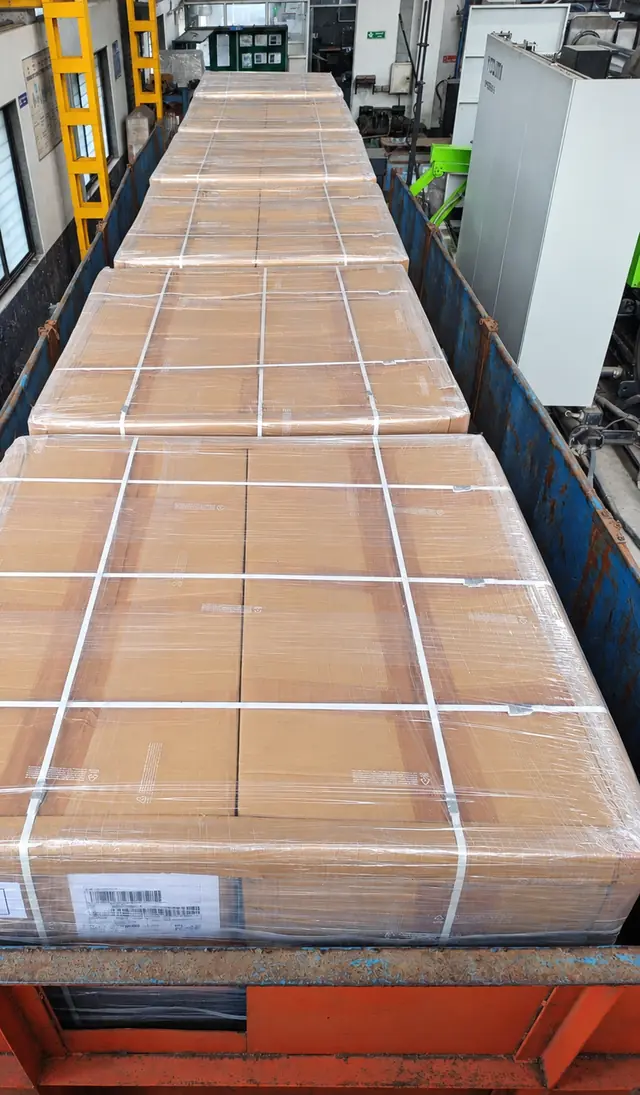
- Protected for transit. Strapped, corner protected and stretch wrapped on heat treated wooden pallets, then loaded for delivery.
The outcome
The customer receives pallets it can check against the delivery note without opening a carton: part, hand, count and pallet number are visible on every face. The same discipline applies to every series part we ship.
Customer name withheld. Quantities shown are from one consignment.
Have a similar part?Send the drawing and annual volume. An engineer replies within 24 hours.
Request a quote →